A Range Rover gearbox fault warning can appear suddenly, sometimes alongside harsh shifting, reduced performance, a flashing gear indicator or an inability to select Drive or Reverse.
Although the message refers to the gearbox, it does not automatically mean that the complete transmission has failed. The warning may be triggered by low battery voltage, wiring problems, sensor faults, control-module communication errors, software or adaptation issues, fluid leaks, internal transmission wear or a problem with the gear selector.
Proper diagnostics should always come before replacing a gearbox or transmission component.
What Does “Gearbox Fault” Mean on a Range Rover?
The transmission control module constantly monitors gear selection, hydraulic pressure, clutch operation, temperature, speed sensors and communication with other vehicle systems.
When it detects a reading or operating condition outside the expected range, it stores a diagnostic trouble code and may display a gearbox warning.
The vehicle may also enter a restricted-performance or emergency operating mode. This is designed to reduce the risk of further damage, but it does not make continued driving safe in every situation.
The exact cause depends on the Range Rover model, production year, transmission type, stored fault codes and symptoms.
Common Range Rover Gearbox Fault Symptoms
A gearbox problem may be accompanied by one or more of the following:
- “Gearbox Fault” displayed on the dashboard
- Restricted performance message
- Flashing gear indicator
- Delayed engagement of Drive or Reverse
- Vehicle unable to shift out of Park
- Inability to select Drive or Reverse
- Harsh or sudden gear changes
- Transmission slipping
- Engine speed rising without normal acceleration
- Vehicle remaining in one gear
- Shuddering or vibration
- Clunking when selecting a gear
- Transmission warning after stopping or restarting
- Warning appearing during an ECO stop/start event
- Burning smell or visible fluid leak
These symptoms should be documented carefully because they can help guide the diagnostic process.
Common Causes of a Range Rover Gearbox Fault
1. Weak Battery or Low System Voltage
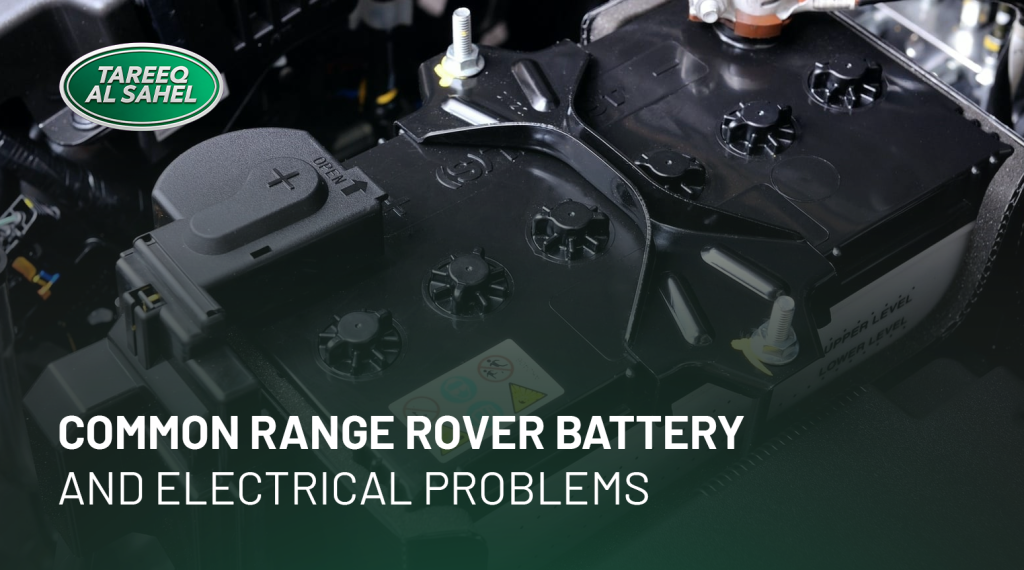
Modern Range Rover transmissions depend on stable electrical voltage. A weak battery, poor battery connection or charging-system fault may interrupt communication between the transmission and other control modules.
Low voltage can cause:
- Multiple dashboard warnings
- Gear selector problems
- Communication fault codes
- Intermittent gearbox warnings
- Warnings that appear during starting
- Restricted transmission operation
If several unrelated warnings appeared at the same time, battery condition and charging voltage should be checked before expensive transmission work begins.
2. Transmission Control Module Fault
The transmission control module, commonly called the TCM, controls and monitors gearbox operation. A software problem, internal module fault, incorrect configuration or communication error may trigger a warning.
Depending on the model and fault, diagnosis may involve:
- Reading TCM fault codes
- Checking software levels
- Testing module power and ground circuits
- Inspecting network communication
- Updating or configuring the module
- Completing transmission adaptations
A control-module warning does not automatically mean the physical transmission needs replacement.
3. Gear Selector Module Problem
Range Rover models may use a rotary selector or electronic gear-selection system. A fault with the selector, its wiring or its communication with the transmission module can prevent the vehicle from recognizing Park, Reverse, Neutral or Drive.
Possible symptoms include:
- Selector failing to rise or operate
- Gear indicator flashing
- Vehicle remaining in Park
- Incorrect gear displayed
- “Gearbox Fault” appearing during selection
- Drive or Reverse not engaging
The selector and its related circuits should be tested before assuming the fault is inside the gearbox.
4. Wiring or Communication Fault
The transmission communicates with the engine, braking, body and chassis control systems. Damaged wiring, poor connections, corrosion or network communication faults can trigger a gearbox warning even when the gearbox itself is mechanically functional.
JLR has documented model-specific cases involving communication problems and internal transmission wiring. This is why the complete vehicle—not only the transmission module—should be scanned.
5. Transmission Fluid Leak or Fluid-Condition Problem
Transmission fluid provides hydraulic pressure, cooling and lubrication. A leak or incorrect fluid level can affect shifting and contribute to internal wear.
Possible warning signs include:
- Fluid underneath the vehicle
- Delayed gear engagement
- Slipping
- Harsh shifting
- Transmission overheating
- Burning smell
- Unusual noise
The correct fluid specification and filling procedure are important. Fluid level should be checked using the appropriate workshop process for the specific transmission.
6. Speed or Temperature Sensor Fault
The transmission uses sensor data to calculate gear changes and monitor operating conditions. An incorrect input or failed sensor may cause the control module to restrict transmission operation.
Diagnosis requires checking the stored codes and comparing live sensor information with the vehicle’s actual operating condition.
7. Solenoid or Valve-Body Problem
Transmission solenoids control hydraulic pressure and direct fluid through the valve body. Electrical, hydraulic or mechanical solenoid problems can cause:
- Harsh shifts
- Missing gears
- Delayed engagement
- Slipping
- Restricted performance
- Gearbox warning messages
A diagnostic scan, electrical testing and hydraulic assessment may be needed to determine whether the problem is electronic or mechanical.
8. Incorrect or Incomplete Adaptations
The transmission control system learns operating values over time. Adaptation procedures may be required following certain repairs, software work, module replacement or transmission replacement.
Incorrectly resetting adaptations—or failing to complete the correct relearning procedure—may cause poor shift quality or warning messages.
Adaptations should not be reset as a general experiment. The procedure must match the vehicle, transmission and repair performed.
9. Software or Calibration Issue
Some Range Rover gearbox warnings are connected to model-specific software or calibration conditions.
JLR technical information has documented situations where software or communication issues caused warning messages, flashing gear indicators, restricted operation or difficulty selecting a gear.
The vehicle identification number and current software level should be checked before replacing components.
10. Internal Gearbox Wear or Damage
Mechanical transmission problems remain a possible cause, particularly when the vehicle has persistent slipping, harsh engagement, abnormal noise, contaminated fluid or loss of specific gears.
Possible internal faults include problems involving:
- Clutch packs
- Bearings
- Shafts
- Seals
- Hydraulic components
- Torque converter
- Valve body
- Internal wiring harness
Mechanical conclusions should be supported by diagnostic evidence, testing and inspection.
Can You Drive With a Range Rover Gearbox Fault?
Driving may cause additional damage if the vehicle is slipping, overheating or engaging gears harshly.
Stop driving and arrange professional assistance if:
- Drive or Reverse cannot be selected
- The vehicle is stuck in one gear
- The transmission is slipping severely
- There is a strong burning smell
- Fluid is leaking heavily
- The vehicle makes loud mechanical noises
- The warning is red or instructs you to stop
- Gear engagement is unpredictable
- The vehicle cannot maintain a safe speed
If the warning disappears after restarting, the fault may still be stored in the control module. Restarting the vehicle does not confirm that the problem has been repaired.
How We Diagnose a Range Rover Gearbox Fault
At Tareeq Al Sahel, the diagnostic process may include:
- Recording the exact warning and driving symptoms.
- Scanning all relevant vehicle control modules.
- Reading transmission fault codes and freeze-frame information.
- Testing the battery and charging system.
- Checking transmission-module communication.
- Inspecting the gear selector and related wiring.
- Reviewing transmission temperature and live sensor data.
- Checking for fluid leaks and assessing fluid condition.
- Inspecting wiring, connectors, power supplies and grounds.
- Checking applicable software and calibration information.
- Performing mechanical or hydraulic testing when required.
- Verifying gear selection and shift quality after repair.
This approach helps separate an electrical or software fault from an internal mechanical transmission problem.
Does a Gearbox Fault Mean I Need a New Transmission?
Not necessarily.
Some gearbox warnings can be resolved through wiring repair, battery replacement, selector repair, software correction, module programming, adaptation procedures, fluid-leak repair or replacement of a specific transmission component.
A replacement or rebuilt gearbox should only be recommended when diagnostic testing supports that conclusion.
Range Rover Gearbox Repair in Sharjah
Tareeq Al Sahel provides specialist gearbox diagnostics, programming and transmission repair for Range Rover and Land Rover vehicles in Sharjah.
Models we service include:
- Range Rover
- Range Rover Sport
- Range Rover Evoque
- Range Rover Velar
- Land Rover Defender
- Land Rover Discovery
- Discovery Sport
If your Range Rover is showing a gearbox warning, delaying engagement or changing gears harshly, arrange a diagnostic inspection before the condition becomes worse.
Frequently Asked Questions
Why did my Range Rover gearbox fault appear suddenly?
A sudden warning may be caused by low voltage, a temporary communication failure, a sensor or wiring problem, software, the gear selector or an internal transmission fault. Stored diagnostic codes are needed to narrow down the cause.
Can a weak battery cause a gearbox fault?
Yes, unstable or insufficient voltage can disrupt control-module operation and communication. Battery and charging tests are especially important when multiple warnings appear together.
Why is my Range Rover stuck in Park?
Possible causes include the gear selector, brake-switch input, wiring, module communication, low voltage or a transmission-control fault.
Why does the fault disappear after restarting?
Cycling the ignition may temporarily restore normal operation. However, the diagnostic code or underlying condition may remain and the warning can return.
Can a gearbox software update fix the warning?
Certain model-specific faults may involve software or calibration. The vehicle’s VIN, fault codes and software level must be checked before deciding whether an update is appropriate.
How much does Range Rover gearbox repair cost?
The cost depends on whether the fault involves voltage, wiring, software, sensors, the selector, valve body, transmission fluid or internal mechanical damage. An accurate estimate requires diagnosis.
Do you diagnose Range Rover gearbox faults in Sharjah?
Yes. Tareeq Al Sahel provides Range Rover and Land Rover gearbox diagnostics, programming and repair in Sharjah.
Book a Gearbox Diagnostic Inspection
Contact Tareeq Al Sahel if your Range Rover is showing a gearbox warning, struggling to select a gear, shifting harshly or operating in restricted-performance mode.
Telephone: +971 50 777 2806
Email: sahelauto@yahoo.com
Location: Industrial Area 12, next to Geco Complex, Sharjah, UAE